Sexton and Gabrielle’s affair and its political fallout
Deception PointSexton and Gabrielle’s affair and its political fallout links an undisclosed relationship between Senator Sedgewick Sexton and his campaign assistant, Gabrielle Ashe, to the campaign’s public fight over NASA. The White House’s leak makes their private history a political weapon; Sexton’s denial turns the episode into a revealing performance for Gabrielle, while the President’s announcement of a major NASA discovery makes the senator’s own attacks on the agency newly costly.
The relationship inside the campaign
Gabrielle had become a valuable member of Sexton’s campaign after he promoted her to personal campaign assistant. She worked long days without pay, on the stated understanding that the experience would teach her politics from the inside. That arrangement placed her close to the candidate and gave her growing influence over the campaign’s message, but also left her professionally dependent on the man who controlled her position.
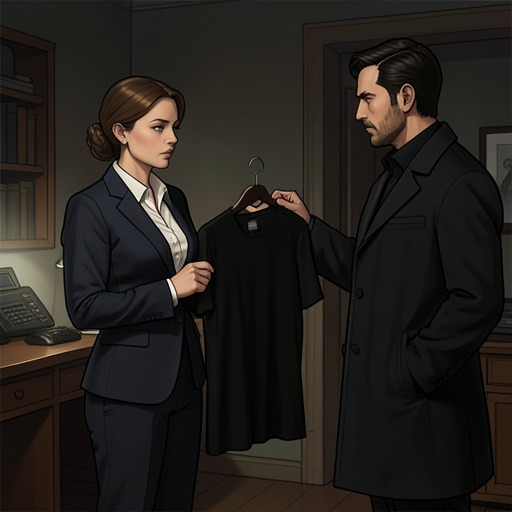
Sexton initiated a private relationship after inviting Gabrielle to an after-hours meeting in his office under the guise of an orientation. The account presents the encounter as a breach of the professional boundary created by her new role. Gabrielle regretted it afterward and offered to resign. Sexton refused her resignation; she remained on staff but made clear that their relationship would be strictly professional from then on. The affair did not erase their working connection, but it changed its terms: Gabrielle continued serving the campaign while keeping the personal relationship at a distance.
NASA becomes campaign strategy
Gabrielle’s importance to Sexton’s political fortunes extended well beyond her administrative work. When he was trailing in the primary polls and his argument against government overspending was failing to gain traction, she proposed making NASA’s costs a central campaign issue. Her case focused on the agency’s budget overruns, failed missions, and White House bailouts, which she framed as evidence of wasteful government spending.
Sexton adopted the strategy and made NASA an unofficial emblem of his argument against big government. The choice was politically unusual: NASA was a prominent symbol of national pride, and attacking it risked alienating voters. Gabrielle’s political instincts nevertheless persuaded him that its spending offered a potent line of attack. Thus their relationship was bound up with a professional alliance in which her analysis helped shape the senator’s position, even as the private history between them remained a liability that could be exposed.
The leak and Gabrielle’s reassessment
About a month before the events surrounding the NASA announcement, the President’s campaign staff, unsettled by slipping polls, leaked a story alleging that Sexton had had an affair with Gabrielle. The White House suspected the story was true but lacked hard evidence. Sexton responded with a national press conference, denying the allegation and presenting himself as outraged that the President would invoke his late wife’s memory through such an accusation.
The performance was so convincing that Gabrielle herself almost believed they had never been involved. Its immediate political effect was to let Sexton seize the initiative, but its personal effect was different: watching him lie so effectively made Gabrielle recognize him as dangerous. She still believed she was backing the strongest candidate in the race and continued to believe in his political message, yet she began to doubt the man delivering it. The split between message and messenger becomes the episode’s central consequence for her: professional loyalty persists, but unexamined faith does not.
A private scandal meets a public discovery
The affair’s political stakes sharpen as NASA becomes the subject of a public confrontation. In a media discussion with White House adviser Marjorie Tench, Sexton asks whether NASA has suffered another recent failure, treating the possibility as an opening to renew his attack. Tench counters by asking whether he would abolish the agency if space exploration could not be carried out for less than NASA was spending. The forced choice exposes the severity of his position: he cannot keep his criticism at the level of general complaints about management once the question demands a clear answer.
The President, meanwhile, recognizes that the discovery he plans to announce will immediately become political. He warns Rachel Sexton that a scientific triumph may be recast as a political fraud, with conspiracy allegations diverting attention from the evidence and damaging NASA, the White House, science, and the country. Rachel notices that he refers carefully to political opponents rather than naming her father. The choice of language places the affair and its surrounding campaign conflict within a broader contest over who controls the public interpretation of events.
At the White House press conference, the President announces the discovery to the world. The revelation transforms the political environment in which Sexton’s anti-NASA campaign has been operating. A television analyst assesses the announcement as a devastating blow: the discovery has revived the President’s campaign, while Sexton’s willingness to abolish NASA funding makes the news a particular liability for him. The private scandal is not the sole cause of the senator’s political setback, but the affair has already exposed the gap between his public presentation and private conduct; the NASA debate now magnifies the consequences of his political choices.
Consequences and significance
The episode joins two forms of political vulnerability. The leak makes Sexton’s private conduct available for public scrutiny, but his denial protects him in the short term by turning an allegation without hard evidence into an attack on the President. For Gabrielle, the crucial consequence is not simply that the affair has been exposed as a campaign issue: it is that she has watched Sexton perform innocence so convincingly that she can no longer equate confidence in his message with trust in him.
At the same time, the policy she helped put at the center of his campaign becomes a source of exposure. Gabrielle’s argument against NASA was designed to make government spending politically salient; the President’s announcement gives the agency a new public meaning, and Tench’s question forces Sexton to state how far he will take his opposition. The resulting reversal shows how a successful campaign frame can become a trap when circumstances change. In the affair’s political fallout, private intimacy, campaign strategy, and public credibility converge, leaving Gabrielle caught between the work she helped build and her growing doubts about its candidate.